


Somebody told me three years ago that blogging is dead. I almost believed them. Then I found out that the global content marketing industry is worth over $107 billion and the average monetizing blogger earns around $62,275 a year. That person was very, very wrong.
If you’re sitting somewhere in the United States right now wondering if it’s too late to start; it’s not. The question isn’t whether blogging works. The real question is whether you’re going to take the first step today or keep reading about it forever.
This guide on how to start a blog and make money for beginners will walk you through every single thing you need from picking your niche to making your first dollar online. No fluff, no techy jargon, just practical steps that actually work.
Why Blogging Still Makes Sense in 2026

Before we talk about the “how,” let me just quickly show you why this is still worth your time in America and beyond.
Bloggers in the finance niche alone earn an average of $9,100/month (according to a RankIQ study of over 800 profitable blogs). Beginners in the US who stay consistent can realistically hit $500 – $2,000/month within their first 6 – 12 months.
And here’s the beautiful thing about blogging. The content you write today can still earn money for you 3 years from now. That’s what we call passive income, and its one of the main reasons so many people across the country are figuring out how to start a blog and make money for beginners right now.
Here’s a quick snapshot of why blogging is still a smart business in 2026:
- You can launch for as little as $35 – $100 per year
- You work from your home in Texas, a café in Chicago, wherever
- Multiple income streams: Ads, affiliate commissions, digital products, services
- AI tools help you create content faster without losing your voice
- Google still rewards authentic, genuinely helpful content (E-E-A-T)
Step 1: Choose a Niche

Your niche is your blog’s identity. Pick something too broad and you’ll never stand out. Pick something too narrow and you’ll run out of things to write about.
The sweet spot sits where three things overlap: what you enjoy, what you actually know, and what people in the US (and globally) are already spending money on.
Some of the most profitable blog niches for American readers right now include:
- Personal Finance & Investing
- Digital Marketing & SEO
- AI & Technology Tools
- Health & Fitness
- Remote Work & Side Hustles
To validate your niche idea, check Google Trends, browse Reddit communities and look at what’s selling on Amazon in that category. If people are already spending money there, that’s your green light.
Step 2: Set Up Your Blog the Right Way
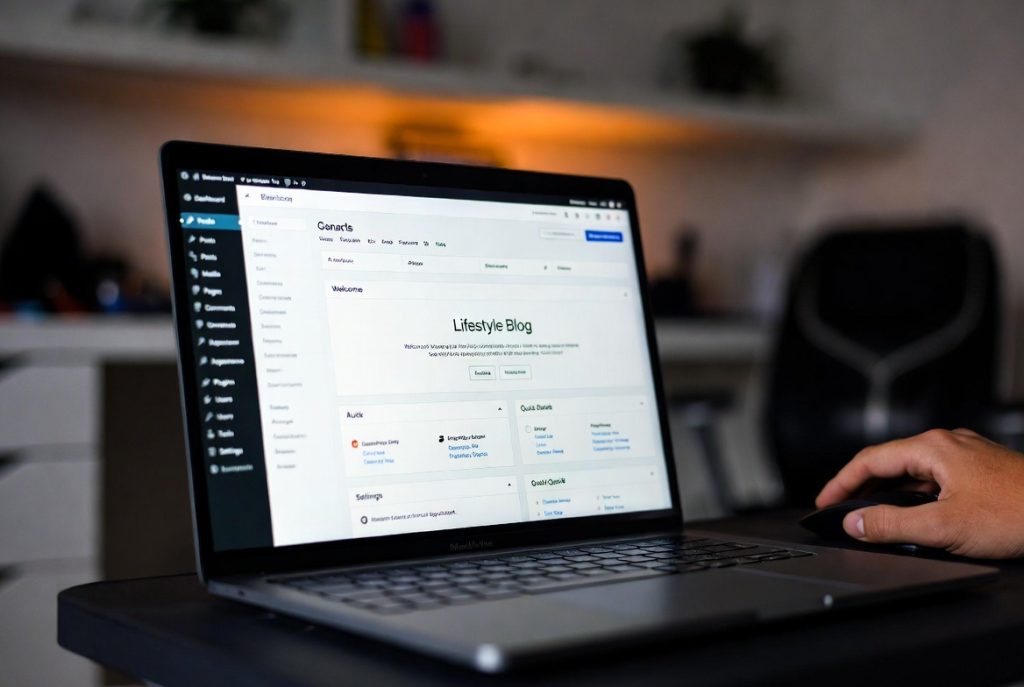
This is where a lot of beginners gets confused, but I’ll make it really simple.
Pick Your Domain Name
Your domain is your blog’s address on the internet (like nusnote.com). Keep it short since under 15 characters is ideal. Use your name, your niche or a creative brand name. Register it through your hosting provider to save money.
Get Reliable Web Hosting
For how to start a blog and make money for beginners, self-hosted WordPress.org is the only platform I recommend. It gives you full ownership of your content, complete SEO control, and zero restrictions on how you earn money.
You’ll need a hosting provider to put your blog on the internet. One that I personally recommend is KnownHost. They’re a US-based hosting company known for excellent performance, solid uptime, and real customer support which matter a lot when your blog starts getting traffic. Their managed WordPress hosting plans are beginner-friendly and scales well as your blog grows.
Once you’re signed up, most hosts KnownHost gives you one-click WordPress installation. Done. Your blog is technically live.
Install a Fast, Clean Theme
Your theme controls how your blog looks. Three of the fastest free options are Kadence WP, Astra and GeneratePress. All three are mobile-responsive (a big deal for SEO in the US), load super fast, and look professional without needing a designer.
Step 3: Install the Right Plugins From Day One
Plugins are like apps for your WordPress blog. But don’t go installing 40 of them; that’s a rookie mistake that’ll slow your site down.
Here’s the short list of what you actually need:
RankMath – Free SEO Plugin)
If you’re learning how to start a blog and make money for beginners, RankMath is the one SEO plugin you absolutly need. It’s free, it gives you a real-time SEO score as you write each post, handles schema markup (which helps you appear in Google rich results), and tracks your keyword rankings; all inside your WordPress dashboard. The free version lets you optimize up to 5 keywords per post, which is more than enough to start.
No other free SEO plugin comes close for value.
WP Rocket – Paid Caching Plugin
Page speed is a Google ranking factor, and slow blogs lose both traffic and readers especially in the US where people have zero patience for slow websites.
WP Rocket is hands-down the easiest and most effective caching plugin for WordPress. It works right out of the box — no complicated settings, no tech skills needed. It compresses files, lazy-loads images, and can drastically improve your Core Web Vitals scores. At $59/year for one site, it’s one of the best investments a beginner blogger can make once they’re ready for it.
Wordfence – Free Security Plugin)
Keeps the bad guys out. That’s pretty much all you need to know.
UpdraftPlus – Free Backup Plugin
Backs up your whole blog to Google Drive or Dropbox automatically. One day you’ll be glad you have this.
Step 4: Create Content That Actually Ranks on Google

Content is the heart of your blog. But not just any content but strategic content that targets specific keywords your audience in the US is already searching for.
The Keyword Research Habit
Before writing any post, ask yourself: “Is anyone actually searching for this?” Use free tools like Google Keyword Planner or the free version of Ubersuggest to find keywords with decent search volume and manageable competition.
For every post, target:
- One primary keyword (include it in your title, first 100 words, at least one H2 and your URL)
- 3 – 5 related secondary keywords sprinkled naturally throughout the post.
Write for Humans First, Google Second
A post that reads like a robot wrote it won’t convert readers into buyers. Write like you’re talking to a friend who asked you a question and you want to genuinely help them.
Aim for 1,500 – 3,000+ words for posts targeting competitive keywords. Shorter posts are fine for informational topics, but if you want to rank in the United States for anything worth ranking for, depth matters.
Use AI to Speed Up, but Keep Your Voice
One of the best AI tools for bloggers I’ve come across is GravityWrite. It’s built specifically for content creators and bloggers, not just generic AI writing. You can generate full blog post drafts, create meta descriptions, brainstorm content ideas, write product review sections and even generate SEO-optimized outlines faster than you can open a new Google Doc.
The key with any of the best AI tools for bloggers is to always edit and personalize what comes out. AI gives you the structure and speed; your real experience and voice is what makes readers trust you and come back.
Step 5: Drive Traffic to Your Blog

No traffic = no money. Simple as that.
For beginners, focus on these two free channels first:
1. SEO (Organic Search)
This is the long game. With consistent publishing and proper optimization using RankMath, you can start getting traffic from Google within 3 – 9 months. It’s slow at first, but it compounds beautifully over time.
2. Pinterest
Pinterest is massively underused by new US bloggers. Unlike Instagram or TikTok where content dies in 24 – 48 hours, a single Pinterest pin can drive traffic to your blog for months. It works especially well for niches like food, personal finance, DIY, parenting and lifestyle.
After you have some momentum, you can add email marketing, YouTube and social media but don’t spread yourself too thin in the beginning.
Step 6: How Bloggers Actually Make Money

Now for the part everyone wants to know. Here’s how to start a blog and make money for beginners using the most reliable income streams:
Affiliate Marketing (Best for Beginners)
Affiliate marketing is where you recommend a product or service, someone clicks your special link and buys it and you earn a commission. You don’t handle shipping, customer service or inventory. Just connect people with solutions they already want.
The best part? Once those blog posts are published and ranking, they earn money while you sleep.
Top affiliate networks to join from day 1:
- Amazon Associates: Recommend any of the millions of products on Amazon and earn 1 – 10% commission depending on the category. Perfect if your blog covers physical products, gadgets, books or home goods.
- Fiverr Affiliates: Promote the world’s biggest freelance marketplace and earn up to $150 per referral. Works great for blogs in the business, marketing or “how to make money online” space.
- Awin: One of the largest affiliate networks globally with 25,000+ advertisers across retail, finance, travel and tech. Big brands, reliable tracking and a solid option for US and international bloggers alike.
- TEMU: A fast-growing shopping platform that’s been exploding in popularity across the United States. Their affiliate program offers competitive commissions and converts well because their prices are hard to beat.
- Digistore24: Think of it like ClickBank but with stronger European roots and growing US presence. You’ll find digital products, online courses and software tools with commissions often ranging from 40 – 70%. Perfect if your niche is in health, self-improvement or online business.
Pro tip: Focus on recurring commission programs where you earn every month a referral stays subscribed. Those add up fast.
Display Ads
Google AdSense lets anyone start showing ads with no traffic minimum and is great for very early stages, though earnings are low (around $1 – $5 RPM). Once you hit 50,000 sessions/month, apply to Mediavine where you can earn $15 – $35+ per 1,000 pageviews. Finance and tech blogs in the US consistently earn 2 – 3x more than average because advertisers pay a premium for those audiences.
Selling Digital Products
This is where blogger income really scales. You create something once like an ebook, a template, a mini-course and sell it unlimited times with near-zero overhead. Profit margins sit between 90 – 99%.
Email Marketing and Sales Funnels
Before you even think about selling anything, start building your email list from day one. An email list is the one asset no algorithm can take away from you.
For both email marketing and selling digital products, Systeme.io is one of the most beginner-friendly all-in-one platforms available. It combines email marketing, sales funnels, course hosting, and affiliate management; all in one dashboard. The free plan is genuinely generous (up to 2,000 contacts, unlimited emails, 1 sales funnel), making it one of the best free blogging tools for beginners who want to start selling without paying for 5 different subscriptions.
Free Blogging Tools for Beginners
One of the biggest mistakes beginners make? Spending money on tools they don’t need yet. Here’s a solid free stack to launch with:
| Tool | What It Does | Cost |
|---|---|---|
| RankMath | On-page SEO optimization | Free |
| Canva | Blog graphics, Pinterest pins | Free |
| Systeme.io | Email list + sales funnels | Free (up to 2,000 contacts) |
| GravityWrite | AI writing assistance | Free |
| Cloudflare | CDN + basic speed boost | Free |
These free blogging tools for beginners are more than enough to launch a professional, monetization-ready blog without spending a dollar on tools beyond your hosting and domain name.
Keep Your Blog Healthy
Most beginners focus so much on content and traffic that they completely forget about the technical health of their blog. Broken links, outdated plugins, slow-loading pages and crawl errors quietly kill your SEO and hurt your reader experience.
That’s where BlogFixer comes in. It’s a blog maintenance and optimization service designed specifically for WordPress bloggers. It helps you identify and fix technical issues that hold your blog back in search rankings. Think of it like a regular check-up for your blog’s health. If you’re running your blog as a serious business, keeping it technically clean is not optional.
How Much Can You Make With a Blog?
This is the part most gurus skip because it isn’t glamorous. Knowing what to expect will keep you from quitting when things feel slow.
| Phase | Timeframe | Realistic Monthly Income |
|---|---|---|
| Foundation | Months 1 – 3 | $0 – $50 |
| Early Growth | Months 4 – 6 | $50 – $500 |
| Growth | Months 7 – 12 | $500 – $2,000 |
| Momentum | Year 2 | $2,000 – $5,000 |
| Scaling | Year 3+ | $5,000 – $20,000+ |
Most bloggers who fail quit somewhere between months 3 and 9 right before the compounding effect kicks in. Consistency is genuinely the biggest factor that separates people who make it from those who don’t.
One post a week for 52 weeks beats three posts one month and nothing for the next four.

Final Thoughts
Figuring out how to start a blog and make money for beginners isn’t about being the most talented writer or the most tech-savvy person in the room. It’s about picking a direction and showing up consistently, even when nobody’s reading yet.
The bloggers who are now earning full-time incomes from their couch here in the US and around the world didn’t start with anything special. They just started.
The tools are better than ever, the AI writing assistants like GravityWrite make content creation faster, the free blogging tools for beginners are actually powerful, and the best AI tools for bloggers have lowered the barrier to entry for everyone.
Your job is simple: start, stay consistent and don’t stop in the first 6 months.
The best time to start was yesterday. The second best time is today.