


You know that thing you do on weekends? That weird little hobby or skill you think nobody else cares about? Maybe it’s knitting sweaters for greyhounds, specialized Excel wizardry, or baking sourdough that actually rises.
Well, I’ve got news for you. That “useless” hobby is actually a goldmine waiting to happen.
I used to think the same way. I thought, “Who would pay me to teach them this?” But then I saw someone selling a PDF on “How to organize your spice rack” for $27. And people were buying it. Like, thousands of people.
That’s when it clicked. We live in a world where knowledge is the new currency. You don’t need a PhD or a fancy studio. You just need to know something or anything that helps someone else get from Point A to Point B.
If you’ve been wondering how to create a course to sell or just monetize that brain of yours, you’re in the right place. I’ve spent the last few months diving deep into the rabbit hole of hosting platforms (so you don’t have to), and honestly, some of them are game-changers while others… well, let’s just say they need some work.
What if the knowledge inside your head could pay your bills? Not just a side hustle, but a real income stream. That’s the magic of learning how to create and sell online course. But here’s the tricky part: choosing the right platform. Some are shiny but complicated, others are simple but limited. And then there are those hidden gems that nobody talks about but can change your whole game.
I’ve spent weeks digging into platforms that promise to help you create online classes to sell, host digital products, and even figure out how to sell seminars or memberships. This is not a polished corporate review. It’s me, trying to help you avoid wasting time and money, and maybe even inspire you to finally sell your own online courses.
In this post, I’m going to break down 10 platforms that let you create and sell online course content without needing a degree in computer science. Whether you want to sell online courses for free initially or invest in a powerhouse system, I’ve got you covered.
Key Features You Should Actually Care About
Before we jump into the list, let’s be real for a second. Most reviews will throw a bunch of jargon at you like “SCORM compliance” or “API integrations.” Unless you’re running a university, you probably don’t care about that.
Here is what actually matters when you want to create and sell online course bundles:
- Ease of Use: Can you set it up on a Friday night with a glass of wine?
- Fees: How much of your hard-earned cash are they keeping?
- Marketing Tools: Do they help you sell or just host your files?
- Student Experience: Will your students actually finish the course or get bored and ask for a refund?
1. FreshLearn
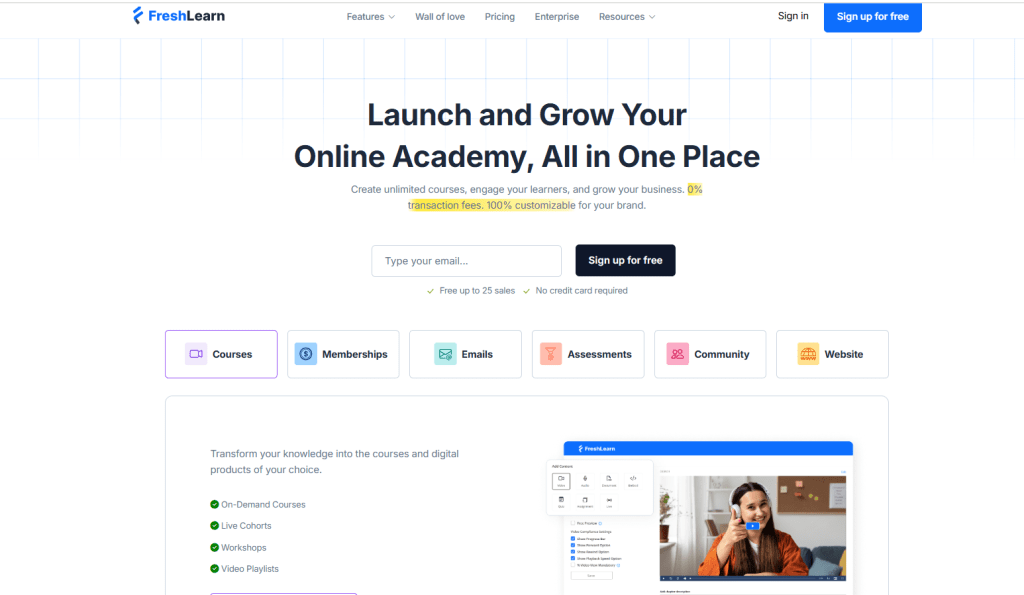
I stumbled across FreshLearn recently and it feels like the new kid on the block who’s actually cool. It’s branded as a “No-Brainer” platform, and honestly, they aren’t lying. FreshLearn creates a vibe that’s very “Masterclass-esque.” It’s designed for creators who want to create and sell online course products, digital downloads and even masterclasses without getting bogged down in tech.
Why I like it:
The interface is super clean. You know how some dashboards look like the cockpit of an alien spaceship? This isn’t that. It’s intuitive. You can set up a course in under an hour. Plus, they have this “Gamification” feature which is huge. It rewards your students for finishing lessons, which means they actually learn, and you get fewer refunds.
The Good Stuff (Pros):
- 0% Transaction Fees: Even on their paid plans, they don’t take a cut of your sales. This is rare.
- Gamification: Badges and rewards keep students hooked.
- Migrator Service: They will literally help you move your course from another platform for free.
The Not-So-Good Stuff (Cons):
- The free plan is a bit limited compared to others.
- It’s newer, so it might not have every single integration a giant like Teachable has yet.
Pricing:
They have a free plan to get you started. Paid plans start around $29/month, which is pretty affordable considering you get to keep all your profits.
My Verdict:
If you want to create and sell online course content and want it to look premium without hiring a designer, FreshLearn is a solid bet. If you’re wondering how to create courses that sell online, FreshLearn’s gamification and community features might be your secret weapon.
2. Systeme.io
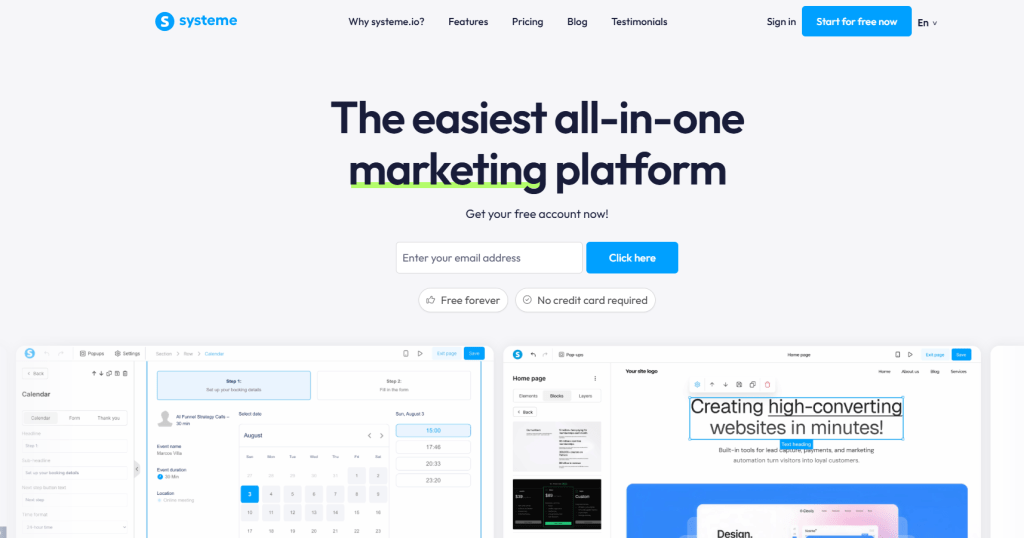
Systeme.io is the scrappy underdog that punches way above its weight. It’s not just about courses, but about building a whole business. Okay, this one is a bit of a beast (in a good way). If you’ve been looking for the best website to sell online course packages that also does literally everything else, this is it. Systeme.io isn’t just a course platform; it’s an entire marketing ecosystem. It handles your email marketing, your sales funnels, your website, your affiliate program, and your courses. It’s basically trying to kill ClickFunnels, and it’s doing a pretty good job.
Why I like it:
The free plan is insane. I had to double-check it wasn’t a typo. You can build a full course, have 2,000 email contacts, and create sales funnels for $0. It’s perfect if you are broke but ambitious (we’ve all been there).
The Good Stuff (Pros):
- All-in-One: You don’t need to pay for Mailchimp or a separate website builder.
- Forever Free Plan: genuinely usable for a beginner.
- Funnel Builder: The drag-and-drop builder is surprisingly good for creating online classes to sell.
The Not-So-Good Stuff (Cons):
- It can be overwhelming. Because it does everything, there are a lot of buttons.
- The design templates are functional but not exactly “Vogue” quality out of the box.
Pricing:
Free for the basics. Paid plans start at $27/month, which is a steal for the features included.
My Verdict:
If you want to create and sell online course products and need a “business in a box” because you don’t want to pay for 5 different software subscriptions, use Systeme.io.
3. Teachable
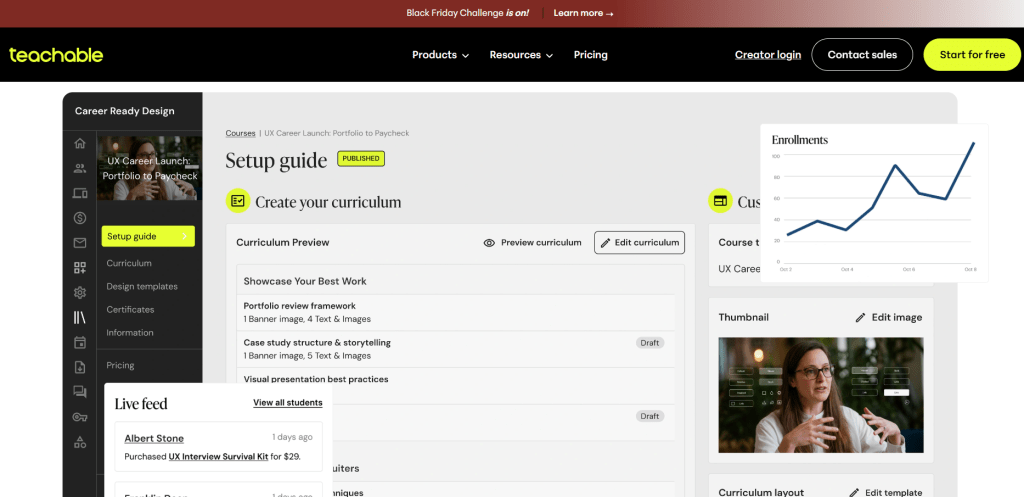
Teachable has been around forever. It’s like that reliable old car that you know it works, but sometimes the buttons stick. Ah, the grandfather of course platforms. You can’t write a list about online courses to sell without mentioning Teachable. It is a dedicated hosting platform. It’s built specifically to host your videos, PDFS, and quizzes. It’s robust, reliable, and everyone knows how to use it.
Why I like it:
It’s reliable. It’s been around forever, so it doesn’t really have bugs. Their checkout process is also very smooth, which is important because a clunky checkout kills sales. They also handle EU VAT tax for you, which is a nightmare if you try to do it yourself.
The Good Stuff (Pros):
- Tax Handling: They collect and remit VAT taxes for you. Huge time saver.
- Easy Builder: The course curriculum builder is very logical.
- App: They have an iOS app so students can watch your course on the go.
The Not-So-Good Stuff (Cons):
- On the free plan, they take a massive chunk of your earnings ($1 + 10% per sale). Ouch.
- You can’t fully customize your sales page design unless you know code.
Pricing:
There is a free plan (with high fees). The Basic plan starts at $39/month (billed annually), which drops the transaction fees down to 5%.
My Verdict:
Teachable is the “safe” choice. It works, it’s solid, but watch out for those transaction fees if you’re just starting to create and sell online course bundles on a budget. It is still one of the best platforms to sell online courses, but it’s not perfect. If you can live with occasional glitches, it’s solid.
4. Udemy
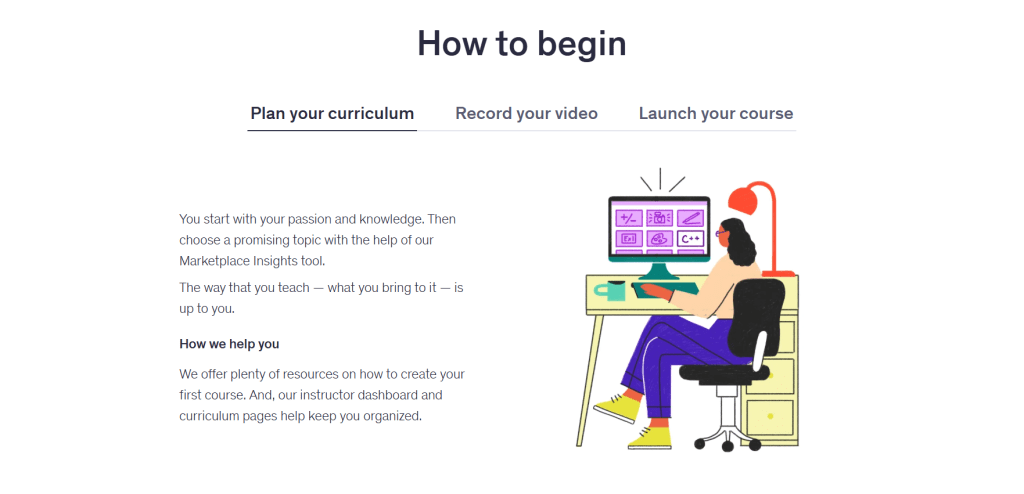
Udemy is the Amazon of online learning. You don’t just create an online course to sell here, but you throw it into a marketplace with millions of students. Udemy is different. It’s not just a hosting platform; it’s a marketplace. It’s like the Amazon of online courses. You upload your course to Udemy and it sits alongside thousands of others. Users browse it to find topics. If you want to create online classes to sell but have zero audience (no email list, no Instagram followers), this is your best friend.
Why I like it:
Traffic. Udemy has millions of students looking for things to learn. If you optimize your course title and keywords, you can get sales while you sleep without posting a single tweet.
The Good Stuff (Pros):
- Built-in Audience: You don’t need to be a marketing genius.
- Free to Host: You don’t pay a monthly fee to have your course there.
- Credibility: Being on Udemy can make you look like a “real” instructor.
The Not-So-Good Stuff (Cons):
- The Revenue Share: This is the kicker. If Udemy sells the course for you (organic traffic), they keep significantly more than half the money (usually you get 37%). If you bring the student, you keep 97%.
- Price Control: You can’t really sell a course for $500 here. Udemy is famous for its “$10 sales.”
Pricing:
Free to join. You pay with a cut of your sales.
My Verdict:
Use Udemy if you have no audience and want to test the waters. It’s a great way to sell online courses for free (cost-wise), but don’t expect to build a high-ticket brand here.
5. Payhip
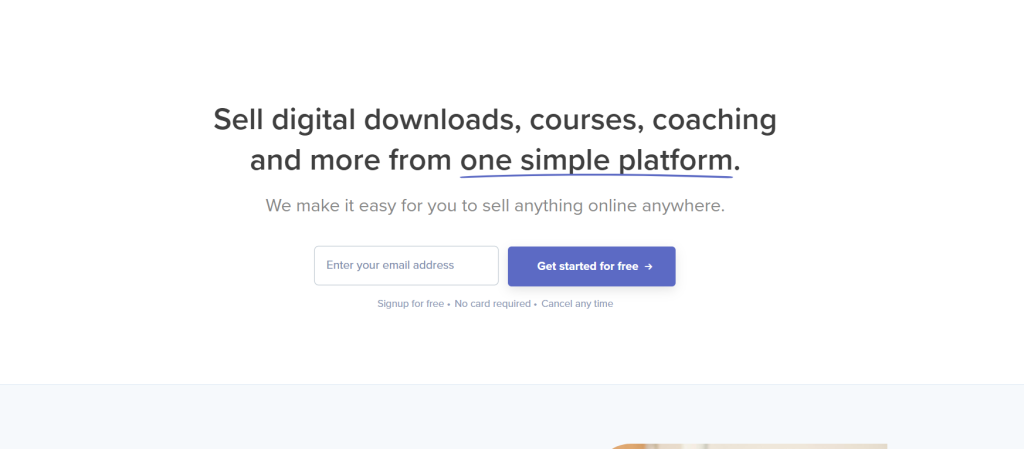
Payhip is the underdog that I secretly love. It started as a place to sell ebooks but has quietly become a great place to create and sell online course content. Payhip is like Shopify’s cousin who doesn’t charge rent. It’s a lightweight platform for selling digital products and courses. It’s a simple e-commerce platform for digital products. It’s incredibly stripped back and minimalist.
Why I like it:
It’s so easy. You can upload a file, set a price, and get a checkout link in 3 minutes. For courses, it has a surprisingly good “drip” feature where you can release lessons over time.
The Good Stuff (Pros):
- Simple Storefront: It builds a nice little store for you automatically.
- EU VAT Handling: Like Teachable, they handle the digital tax mess.
- Instant Payouts: Connects to Stripe/PayPal and you get paid instantly.
The Not-So-Good Stuff (Cons):
- Transaction Fees: The free plan has a 5% transaction fee.
- Basic Design: It’s very clean, but you can’t make it look “fancy.”
Pricing:
Free plan available (5% fee). The $29/month plan drops the fee to 2%.
My Verdict:
If you just want to sell your own online courses without a fuss and you prefer a minimalist look, Payhip is fantastic.
6. Sensei LMS
Okay, WordPress users, this one is for you. Sensei is a plugin for WordPress. It’s actually built by Automattic, the same company that owns WordPress.com and WooCommerce. So, it plays very nicely with the ecosystem.
Why I like it:
It feels native. If you already have a WordPress blog, you just install this plugin and boom—you have a course. You don’t need to send your users to a separate website like “https://www.google.com/search?q=mycourse.teachable.com”. They stay on your site.
The Good Stuff (Pros):
- Control: You own the data. You aren’t renting land on someone else’s platform.
- Interactive Blocks: They have these cool interactive videos and image hotspots that make learning fun.
- Price: It’s generally cheaper than the big SaaS platforms if you already pay for hosting.
The Not-So-Good Stuff (Cons):
- Tech Heavy: You need to manage your own WordPress site (updates, plugins, hosting). If your site breaks, you have to fix it.
- WooCommerce Reliance: To sell the courses, you usually need to install WooCommerce too, which can be heavy.
Pricing:
There is a free version, but the good stuff (Sensei Pro) is usually around $15/month or bundled annually.
My Verdict:
The best platform to sell online courses for control freaks (I say that with love) who already run a WordPress site. Sensei LMS is powerful, but it’s not plug-and-play. If you’re asking how to sell seminars or courses with total ownership, this is it.
7. Podia
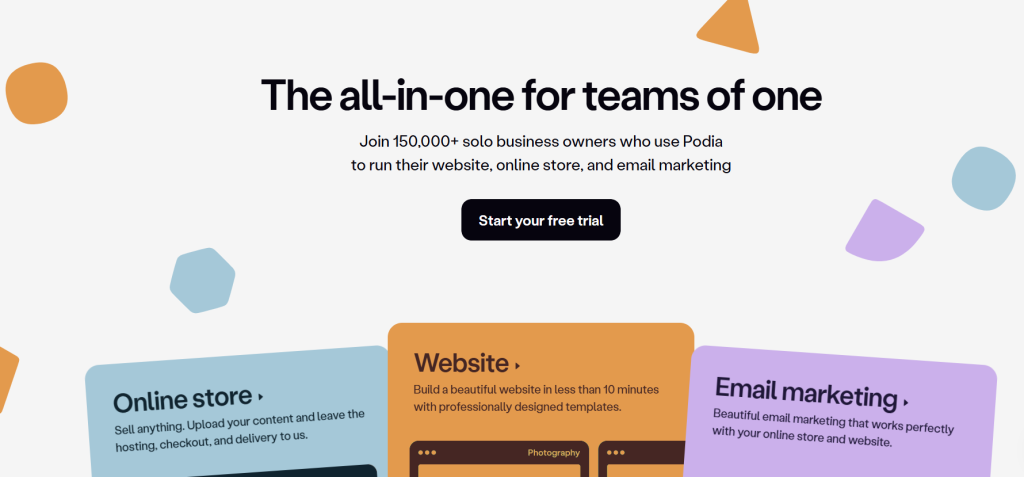
Podia is the friendly all-in-one platform that says, “Don’t worry, I got you.” Podia is just… pleasant. That’s the best word for it. It’s friendly, colorful, and makes you feel happy to be working. Another all-in-one platform. It handles courses, webinars, downloads and community. It’s big on the “community” aspect; think of it like a course platform meets a Facebook Group.
Why I like it:
The interface is beautiful. It’s probably the prettiest dashboard of the bunch. It’s also very simple to create an online course to sell because they strip away all the unnecessary settings.
The Good Stuff (Pros):
- Community: Built-in community features mean you don’t need a separate Slack or Discord.
- No Transaction Fees (on paid plans): You keep what you earn.
- Instant Checkout: The checkout is very fast and converts well.
The Not-So-Good Stuff (Cons):
- Email Limits: Their email marketing isn’t as powerful as Systeme.io or a dedicated tool like ConvertKit.
- Free Plan Fees: The free plan has an 8% transaction fee, which is steep.
Pricing:
Free plan available (8% fee). Paid plans start around $33/month (Mover plan).
My Verdict:
If you want to sell online classes and build a loyal tribe of fans who talk to each other, Podia is the winner. Podia is perfect if you want to sell your own online courses and digital products without juggling multiple tools.
8. Thinkific
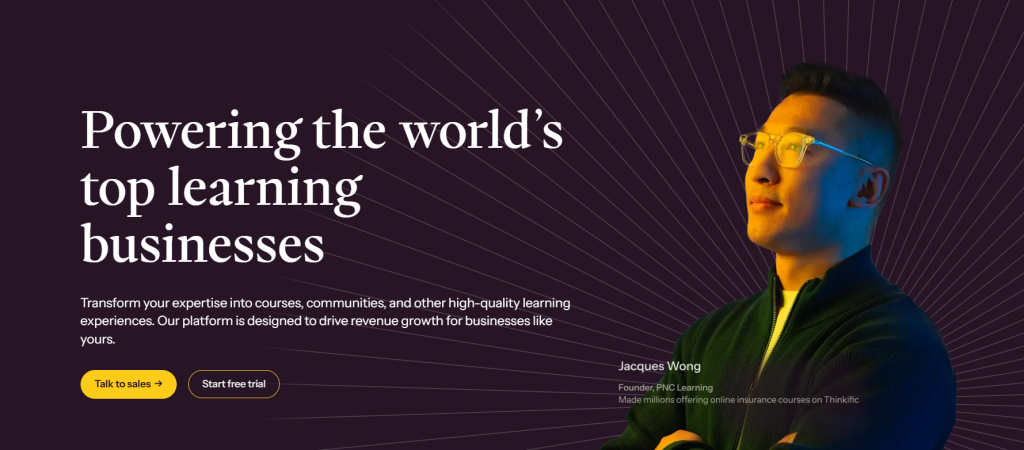
Thinkific feels like the corporate suit of course platforms. It’s polished, structured and scalable. Thinkific is the serious contender. It’s often compared to Teachable, but I think it has a slight edge in customization. A robust course hosting platform used by some big names. It’s designed to help you create courses that sell online at scale.
Why I like it:
The “Site Builder” is really powerful. You can make your course pages look completely unique. They also have zero transaction fees on their paid plans, which is a must-have for me.
The Good Stuff (Pros):
- Reliability: It’s rock solid. Your course won’t crash on launch day.
- App Store: They have an app store where you can plug in other tools (like Shopify or specialized exam tools).
- Free Plan: Their free plan lets you build one course with unlimited students and NO transaction fees. That is a killer deal.
The Not-So-Good Stuff (Cons):
- Checkout Process: It’s a 2-step checkout which can sometimes lower conversion rates slightly compared to a 1-step cart.
- Email: The built-in email tool is basic. You’ll likely need to integrate Mailchimp or something else.
Pricing:
Free plan (1 course, 0% fee). Paid plans start at $36/month.
My Verdict:
Probably the best platform to sell online courses if you want a professional, scalable business and a great free plan to start. Thinkific is one of the best platforms to sell online courses if you’re serious about scaling.
9. Alison

Alison is unique. It’s not about selling, but about free education. But you can still leverage it. Wait, Alison? Isn’t that a place where you take courses? Yes, but you can also publish there. Alison is a publisher. It’s different from the others. You don’t pay them a monthly fee. Instead, you apply to become a “Self-Publisher” or “Course Creator.”
Why I like it:
It’s a totally different model. If you want to how to sell seminars or courses but hate the idea of marketing, Alison is interesting. They monetize through ads and selling certificates. You earn a share of the revenue generated from your course.
The Good Stuff (Pros):
- Traffic: They have millions of learners.
- Support: They help you polish the course because they want it to succeed (since they make money when you do).
- Global Reach: Great for reaching students in developing countries who rely on Alison’s free learning model.
The Not-So-Good Stuff (Cons):
- Revenue: It’s not a high-ticket game. You are earning cents on ads and splits on certificates. You need massive volume to make big money.
- Control: You have less control over branding and pricing.
Pricing:
Free to publish (revenue share model).
My Verdict:
This is for the “Passive Income” seeker who wants to upload content and forget about it. It’s not for building your personal brand empire, but it’s a nice side hustle stream. Alison answers the question of how to create courses that sell online indirectly by giving away value first.
10. Thrivecart
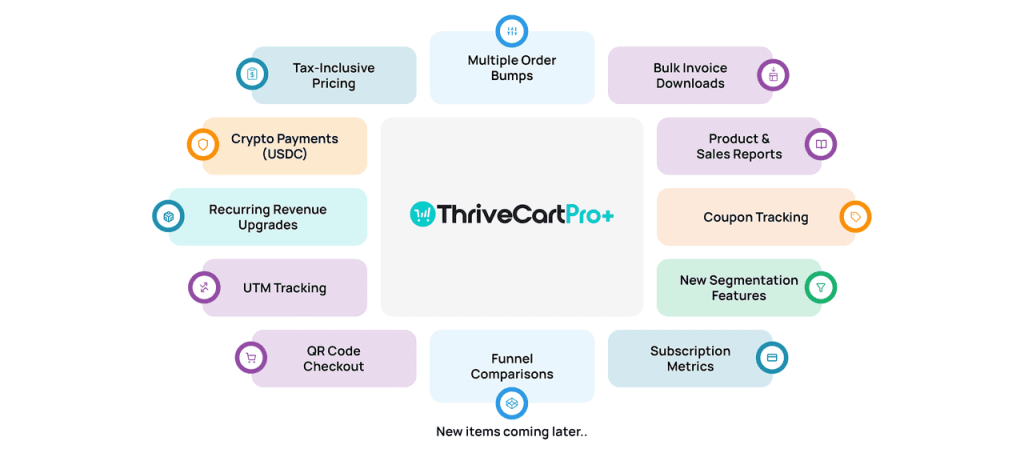
Thrivecart is the secret sauce if you’re asking how to sell online classes with maximum profit. I saved this one for last because it’s a bit of a secret weapon for advanced marketers. Thrivecart is not a course platform, but a cart system. But wow, it’s powerful. Technically, Thrivecart is a “Checkout Cart” software. BUT, they launched “ThriveCart Learn,” which is a full LMS (Learning Management System) built right in.
Why I like it:
One word: Lifetime Deal. unlike every other platform on this list that charges you monthly (forever), Thrivecart costs a one-time fee (currently around $495). You pay once, and you have it for life. No monthly fees. Ever.
The Good Stuff (Pros):
- No Monthly Subscriptions: This saves you thousands of dollars over a few years.
- The Funnels: The checkout funnels (upsells, downsells, bumps) are the best in the industry. This is how to create and sell a course online and maximize profit per student.
- Flexibility: You can do drip content, bundles, etc.
The Not-So-Good Stuff (Cons):
- No Video Hosting: It doesn’t host your videos. You have to host them on YouTube (unlisted), Vimeo, or Wistia and embed them.
- Design: It’s a bit “marketer-y.” Functional, but not pretty like Squarespace.
Pricing:
One-time payment (~$495).
My Verdict:
If you hate monthly fees and know how to embed a video, this is the smartest financial decision you can make.
So, Which One Should You Pick?
Look, I know that was a lot of info. You’re probably sitting there thinking, “Okay, but which one helps me create and sell online course content today?”
Here is my honest cheat sheet:
- I have $0 and just want to start: Go with Systeme.io or Thinkific’s free plan.
- I want to build a serious brand and look pro: FreshLearn or Thinkific.
- I hate tech and just want to upload files: Payhip.
- I want a community vibe: Podia.
- I’m a WordPress nerd: Sensei LMS.
- I hate monthly subscriptions: Thrivecart.
How to Actually Make This Work (The Real Secret)
Choosing a platform is step one. But the platform won’t save you if your course… well, sucks.
Here is the truth about how to sell online classes: You need to solve a specific problem. Don’t make a course called “Introduction to Photography.” Make a course called “How to Take iPhone Photos of Your Kids That Don’t Look Blurry.”
See the difference?
Also, don’t obsess over the camera gear. People buy your course for you and your knowledge, not because you shot it in 4K. I’ve seen courses shot on a webcam sell for $1,000 because the information was life-changing.
A Quick Note on SEO (Because You Need Eyeballs)
When you launch your site, make sure you write a few blog posts or landing page copy that uses terms like how to sell seminars (if that’s your thing) or create and sell online course. This helps Google find you. Don’t stuff the keywords in like a turkey, just sprinkle them naturally where they fit.
Final Thoughts
You are sitting on a goldmine of knowledge. Whether it’s coding, baking, dog training or negotiating a raise; someone out there is Googling “how to…” do that exact thing right now.
They are waiting for you to teach them.
So, pick a platform from the list above. Don’t overthink it. Just pick one, sign up for the free trial, and upload your first video. Imperfect action beats perfect inaction every single time.
If you’re serious about learning how to create and sell a course online, start small. Test with Udemy or Payhip. Then move to Thinkific or Podia when you’re ready to scale. And if you want funnels that print money while you sleep, Thrivecart is waiting.